
The Catholic Church normally celebrates the Solemnity of the Conversion of St. Paul on January 25, but since it lands on a Sunday this year, it is superseded by the Liturgical Sunday. A reformed persecutor of Christians, St. Paul became one of the most significant evangelists of the early Church and the most prolific author in the New Testament. He took Jesus’ final command, “Go, therefore, and make disciples of all nations,” literally and seriously, traveling extensively throughout the known world, as well as sending letters and appointing representatives to places when he could not be there in person. St. Paul’s zeal for converting hearts to Jesus and to Christianity earned him the title, Patron Saint of Missionaries and Evangelists. inculturation culture
The command to make disciples of all nations necessarily means that the Church and her missionaries must enter already established cultures and navigate the process of evangelization to be most effective. St. Paul’s letters illustrate that, even in the earliest days of the Church, there was a clear message of both diversity and unity in the Body of Christ. He wrote to former Jews, pagans, and Hellenists from different countries and backgrounds that included things such as idol worship and dietary restrictions. Yet, while each community maintained its autonomous culture, under Paul’s guidance, they came to be united under the headship of Christ. inculturation culture
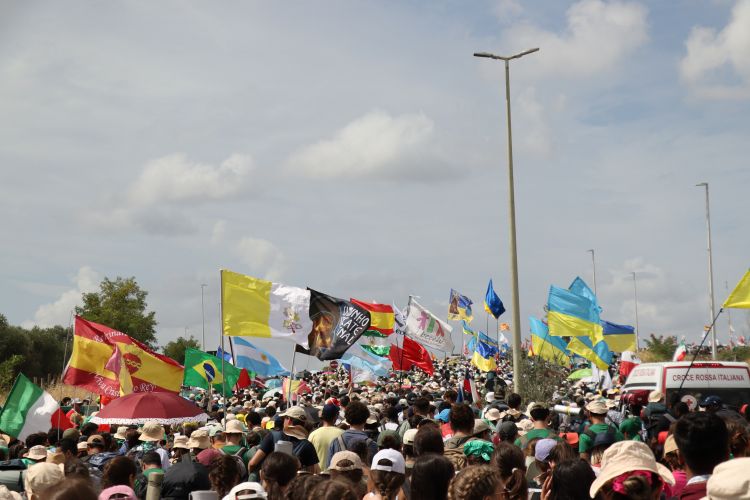
As a matter of fact, even before St. Paul began to evangelize, the first instance of the Church formally addressing a cultural issue occurs in the Acts of the Apostles, Chapter 15, at the Council of Jerusalem. The question had arisen as to whether or not Gentiles who converted to Christianity ought to be circumcised according to Jewish law. It is discussed and determined to be unnecessary, allowing the Gentiles to maintain their own customs, and announced formally by St. Peter, the first pope. Yet, the converted Jews and Gentiles remained united as Christians under their new Sacrament of Baptism. As the Catholic Church has now grown worldwide, and the ease of travel and communication has made it easy for us to see the impact culture has had on the practice of Catholicism from place to place, we can be surprised by the cultural differences, even in how the liturgy is celebrated. Sometimes, there may be differences even from neighborhood to neighborhood, depending on racial or ethnic demographics, or the area’s socioeconomic makeup, which can heavily influence the culture of an area. Fortunately, the Magisterium addresses this issue, so let’s look at what the Church has to say about this form of unity in diversity, known as inculturation.
Beginning with the Catechism of the Catholic Church, the Church teaches that the mystery of Christ is entirely too rich to be restricted to a simple expression, including in liturgical tradition. Holiness can be expressed in a variety of ways, even ways that are foreign to our own understanding. “Through the liturgical life of a local church, Christ, the light and salvation of all peoples, is made manifest to the particular people and culture to which that Church is sent and in which she is rooted. The Church is catholic, capable of integrating into her unity, while purifying them, all the authentic riches of cultures” (CCC 1202). In other words, these varying cultural liturgical expressions of holiness are made holy by Jesus himself through the Catholic (universal) Church in which they are being practiced. Quoting the Second Vatican Council’s Sacrosanctum Concilium: Constitution on the Sacred Liturgy the Catechism explains that inculturation can genuinely benefit and enrich liturgical practice without imposing rigid uniformity. “The celebration of the liturgy, therefore, should correspond to the genius and culture of the different peoples” (CCC 1204). This allows Christ to redeem the very culture he enters rather than abolishing it altogether. He allows us to maintain our cultural identity so that we may glorify his Father in a multitude of ways, rather than like a homogeneous collective of cookie-cutter robots. inculturation culture
The Church maintains, however, that while cultural diversity is not only permissible but also beautiful and necessary, certain practices of the Faith cannot be altered. “In the liturgy, above all that of the sacraments, there is an immutable part, a part that is divinely instituted and of which the Church is the guardian, and parts that can be changed, which the Church has the power and on occasion also the duty to adapt to the cultures of recently evangelized peoples” (CCC 1205). This means, for instance, that you may attend Mass from place to place, and it may look and feel different each time. Whether by country or neighborhood, the music or atmosphere may be different. I have personally attended Mass in the Caribbean where dancing in the pews and aisles for every song was standard, something not as common in the U.S. However, the format of the Mass cannot change – Introductory Rites, Liturgy of the Word, Liturgy of the Eucharist, and Concluding Rites – and the words of the Institution of the Eucharist cannot change. Ultimately, liturgical inculturation evangelizes by making worship a “source and summit” that nourishes peoples through local expressions, enhancing catholicity without compromising universality. We see the evidence of this when believers commit more deeply to faith through their culture.
For further clarification, not every cultural expression is permissible and purified by Christ. Sacrosanctum Concilium clarified, Variations are permitted “provided that the substantial unity of the Roman rite is preserved” (SC 38). Further:
Even in the liturgy the Church has no wish to impose a rigid uniformity in matters which do not implicate the faith or the good of the whole community; rather does she respect and foster the genius and talent of the various races and peoples. Anything in these peoples’ way of life which is not indissolubly bound up with superstition and error she studies with sympathy and, if possible, preserves intact. Sometimes in fact she admits such things into the liturgy itself so long as they harmonize with its true and authentic spirit. (SC #37)
Thus, anything that is directly opposed to the teachings of Christ and his Church would not be permitted, as that would be harmful to the soul and not in line with the Church’s mission of salvation. However, note that when culture is not bound up in error, it ought to be preserved whenever possible.
Finally, in his Apostolic Exhortation Catechesi Tradendae: On Catechesis in our Time, Pope St. John Paul II states, “Catechesis will seek to know these cultures and their essential components; it will learn their most significant expressions; it will respect their particular values and riches. In this manner, it will be able to offer these cultures the knowledge of the hidden mystery and help them to bring forth from their own living tradition original expressions of Christian life, celebration and thought” (CT 53). However, he explains that, as the Gospel is communicated to each culture, it will simultaneously communicate the culture in which Jesus lived and every culture in which it has already been expressed throughout the centuries. Then, that culture will also be transformed by the Gospel. The beauty of the unified Body of Christ is that nothing exists in isolation. “When that power enters into a culture, it is no surprise that it rectifies many of its elements. There would be no catechesis if it were the Gospel that had to change when it came into contact with the cultures.” Hence, while culture may be preserved, it is also made new when Christ enters in; otherwise, what would be the point?
The Catechism closes its section on inculturation by stating, “Liturgical diversity can be a source of enrichment, but it can also provoke tensions, mutual misunderstandings, and even schisms” (CCC 1206). This statement is made in the context of broader cultural practices, requiring the hierarchy to discern whether certain practices ought to be maintained at the risk of disrupting unity within the Church or hierarchical communion. However, the statement can also apply to us as individuals. Most of us have personal preferences, and likewise, aversions, regarding liturgical celebrations, and I will be the first to admit that is true for me as well. However, God created a diverse world and a diverse people intended to be unified under one Church. This week, watch videos of Masses from around Europe, Africa, Asia, Central and South America, Australia, the Caribbean, and even a few U.S. cities. Note how the local culture has been maintained, but the essentials of the rites remain the same. Consider how the power of Jesus Christ is not limited by us, and he is able to enter into all places and circumstances to make “all things work for good for those who love God, who are called according to his purpose” (Romans 8:28)
To receive articles and reflections like these directly to your inbox, please subscribe.

Leave A Comment