

This week, the Catholic Church commemorates the Feast of the Presentation of the Blessed Virgin Mary on November 21. I would like to explain the foundations and significance of Mary’s presentation, and then use it as a springboard to demonstrate just a few of the ways in which Mary is a model for our Church today.
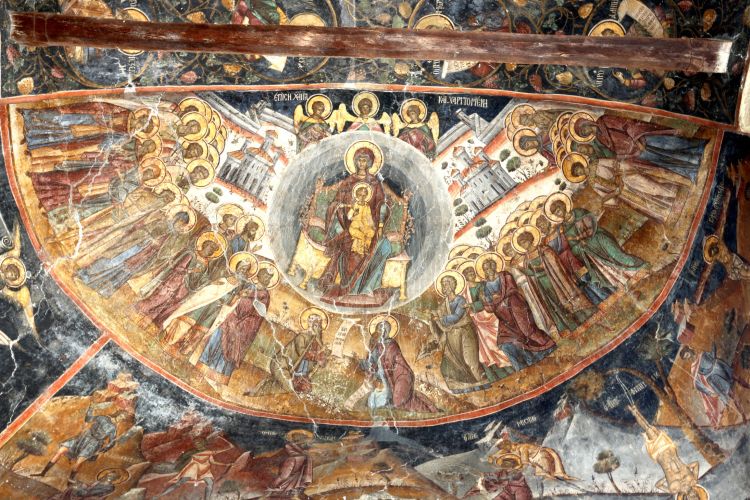
The Feast of the Presentation of the Blessed Virgin Mary celebrates the Sacred Tradition that Mary, as a young child, was brought by her parents, Saints Joachim and Anne, to the Temple in Jerusalem and dedicated entirely to God’s service. It originates from an ancient Christian text, the Protoevangelium of James, which was written circa 120 A.D., when many grandchildren of Mary’s close relatives would still have been alive. While this book is appropriately not included in the canon of scripture, there are elements of it that have been handed down through the Church’s Tradition. From this Sacred Tradition, the Church teaches that from her earliest years, Mary belonged wholly to God, prepared for her mission as Mother of the Messiah.
While the Presentation of Mary is not explicitly in Scripture, it is not unprecedented in Scripture. Rather, it follows a biblical pattern of consecration where God often calls his chosen ones to be dedicated from their youth for a special mission. Hannah, in thanksgiving to God for answering her prayer to bless her with a son, brought Samuel to the Temple after he was weaned, and dedicated him to the Lord’s service (1 Sam 1:22-28). The Lord spoke these words to the prophet Jeremiah, “Before I formed you in the womb I knew you, before you were born I dedicated you, a prophet to the nations I appointed you,” indicating that he was chosen to do God’s important work from the beginning (Jer 1:5). The Angel Gabriel explained to Zechariah that John the Baptist would be sanctified in his mother’s womb and set apart to prepare the way of the Lord saying, “He will be filled with the Holy Spirit even from his mother’s womb” (Lk 1:15). Through these examples alone, it is not a far stretch to conclude that Mary, whose mission of bringing about the Messiah was far greater than any of these, would also have been set apart and consecrated from the beginning. By being offered to God in the Temple, Mary foreshadows the fullness of her vocation as the Mother of God and the faithful disciple who perfectly fulfills God’s will.
Now, let’s look at how the Presentation of Mary naturally leads us into her role as the perfect model for the Church. At the heart of the Presentation is total consecration. Mary was offered without reservation to God, so her fiat, or “yes,” to God at the Annunciation was already anticipated even though no one knew what was to come yet. In other words, her childhood consecration matured into her adult fiat, “Let it be done unto me according to your word” (Lk 1:38). The Church, too, must constantly renew her “yes” to God’s plan, in fidelity to the Gospel and openness to the Spirit. Every act of evangelization, every sacramental celebration, every work of charity is the Church’s ongoing fiat. The Catechism teaches that “the Church is holy” because she is consecrated to God (CCC 823). In Mary’s presentation, we see the first and most perfect image of this holiness. Mary’s complete gift of herself sets the standard for the Church’s vocation as the Bride of Christ, spotless and wholly given over to her divine Spouse. “Mary goes before us all in the holiness that is the Church’s mystery as ‘the bride without spot or wrinkle’” (CCC 773). Mary embodies the vocation of the Church: to hear the Word of God, to conceive it in faith, to bring Christ to the world, and to persevere in holiness until glory.
The Church, above all, is a community of faith, and Mary serves as a model of faith. She shows us what it means to believe. At the Annunciation, she received God’s Word with complete trust: “Behold, I am the handmaid of the Lord; let it be to me according to your word” (Lk 1:38). The Catechism highlights this act of faith: “By her complete adherence to the Father’s will, to his Son’s redemptive work, and to every prompting of the Holy Spirit, the Virgin Mary is the Church’s model of faith and charity” (CCC 967). The Second Vatican Council emphasized the same truth, saying, “The Blessed Virgin advanced in her pilgrimage of faith, and faithfully persevered in her union with her Son unto the cross” (Lumen Gentium, 58). Unlike Zechariah, who doubted the angel’s message, Mary’s fiat stands as an example for every believer. Faith requires humility, courage, and trust in God’s promises, even when the path ahead is unclear.
The Church is often personified as a mother, bringing forth new children of God through the Sacrament of Baptism. Mary, as Mother of Christ and Mother of the Church, models this maternity. The Catechism says: “She is clearly the mother of the members of Christ, since she has by her charity joined in bringing about the birth of believers in the Church” (CCC 963). At the foot of the Cross, Mary received her universal motherhood. “When Jesus saw his mother, and the disciple whom he loved standing near, he said to his mother, ‘Woman, behold, your son!’” (Jn 19:26). Mary reveals to the Church what it means to nurture, guide, and intercede for her children.
Finally, the Church is called to share in the sufferings of Christ. Mary, standing at the foot of the cross, is the perfect example of this participation. “Thus the Blessed Virgin advanced in her pilgrimage of faith and faithfully persevered in her union with her Son unto the cross, where she stood, in keeping with the divine plan” (Lumen Gentium, 58). Mary’s sorrowful participation demonstrates to the Church how to endure trials in hope. She reminds us that suffering is not meaningless, but redemptive when we unite it with Christ. The Church, like Mary, suffers with her children, intercedes for them, and guides them toward resurrection.
Contemplate the Presentation of the Blessed Virgin Mary and how her life belonged to God from the beginning. Like Mary, we each became a temple of the Holy Spirit at our Baptism, consecrated to God and called to glorify him in our lives. One way we can glorify him is by acknowledging and honoring his mother as our mother and as the mother and model of the Church. The Church encourages us to foster a devotion to Mary, with Pope Paul VI telling us that true Marian devotion “proceeds from true faith, by which we are led to recognize the excellence of the Mother of God, and are moved to filial love towards our mother and to the imitation of her virtues” (Marialis Cultus, 56). We can do this in a practical sense by hearing the Word of God with openness as Mary did; giving our fiat to God’s will with faith, as she did at the Annunciation; interceding on behalf of others, as a loving mother does for her children; and remaining steadfast in trials, imitating her perseverance at the cross. This week, challenge yourself: how can you imitate Mary better as a temple of the Holy Spirit?
Marian Chaplet Playlist (Male Voice)
Marian Chaplet Playlist (Female Voice)
To receive articles and reflections like these directly to your inbox, please subscribe.

Leave A Comment