
Today’s topic is both relevant and sensitive for many of you – the pain and worry parents face when their adult children leave the Catholic Church. When adult sons or daughters stop practicing the faith, reject Catholic teaching, or leave the Church entirely, Catholic parents take on a cross that brings much pain and suffering. They may experience deep sorrow, fear for their children’s souls, hopelessness, grief, or even a sense of failure. This is a common cross in our current culture, and if you are carrying it yourself, you are not alone. In addressing this sensitive issue, we must speak the truth about the importance of the Catholic faith and the real risk of separation from the sacraments, while refusing to fall into despair. Parents ought to remember that God’s mercy is greater than their children’s choices and that they still play an important role in their children’s spiritual life. Now, we will look at Scripture, the Catechism of the Catholic Church, Familiaris Consortio (Pope St. John Paul II, 1981), and the witness of St. Monica to examine what parents can realistically and faithfully do while carrying this cross.
The first step is to understand the nature of faith and the limits of even the best Christian parenting. The Church is clear about parental duty. Parents are the primary and irreplaceable educators of their children in the faith (cf. CCC 2221-2223, 2226). They are the “first heralds” of the Gospel, and “through the witness of their lives,” family life forms the foundation of catechesis (FC 36-39). A faithful Catholic family life fosters children’s dispositions to live the faith throughout life.
However, when our children become adults, responsibility for their choices shifts, and they “have the right and duty to choose their profession and state in life” (CCC 2230). Faith, by its very nature, is a free personal act. It is a free response to God’s call “to serve him in spirit and in truth” and cannot be coerced (CCC 160). Parents who have fulfilled their duty in raising their children in the faith have not “failed” if their adult child turns away. Because of the child’s free will, outcomes are not guaranteed or controllable. Good Catholic families may sometimes see children leave the faith, just as children from difficult backgrounds sometimes return or remain faithful. Leaving the practice of the faith and the sacramental life is serious and places a soul at risk without the ordinary means of grace, but God never abandons his search for his lost children.
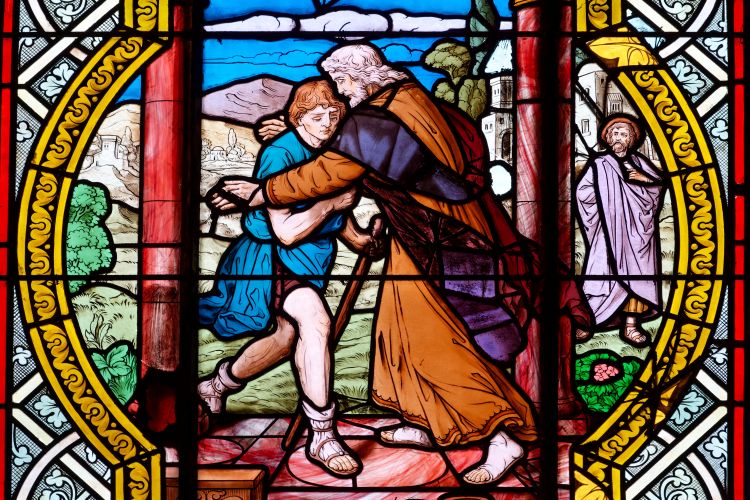
The Parable of the Prodigal Son (Lk 15:11-32) helps us understand God’s heart and actions toward our lost children. Re-read the story and notice that the father does not chase or try to control his son, but instead, waits patiently with compassion. When his son finally returns, he runs to meet him, restores him to the family without anger or judgment, and calls for a celebration. This is God’s disposition and response when our children leave his family – he patiently and lovingly awaits their return and rejoices when they do. Similarly, Hosea describes Israel’s rejection of God using the imagery of God as a loving Father and Israel as a wayward son. God recalls his tender care in raising his son. He comforted and fed him and taught him to walk. Like many adolescents, Israel became stubborn and disobedient, prompting the Father to discipline his people with exile and servitude to other countries. Still, God never stops loving his rebellious son and announces his compassion and plans for restoration (cf. Hos 11). Finally, consider the parables of the lost sheep and the lost coin (cf. Lk 15:1-9). By telling these two parables in succession, Jesus describes the kind of rejoicing that fills the family when a lost member returns home. Through Scripture, God reveals his divine plan: to respect his children’s free will while always waiting with open arms for their return.
Turning to a model of heroic virtue, St. Monica is a holy example of a mother whose son (and husband) lived a life inconsistent with the Catholic faith. Monica wept and prayed for decades for her son, St. Augustine, who rejected Christianity for worldly pleasures and heretical teaching. At one point, she followed him to Milan to convince him to come back home, where she would have more influence over him. However, advice commonly attributed to St. Ambrose, the bishop of Milan and Augustine’s mentor, was that she “speak less to Augustine about God and more to God about Augustine,” which she did. Her perseverance in prayer, not her control, produced fruit. Ambrose’s mentorship and God’s timing brought Augustine’s conversion, but Monica’s intercession was instrumental.
We have addressed the ideal disposition of a parent carrying the cross of having an adult child leave the Church, but he or she may still feel helpless and want to do more to encourage and support the conversion process. Here are some practical and faithful responses in this situation:
- Like St. Monica, you can pray persistently and with trust. Offer daily prayer, the Rosary, Masses, and acts of reparation for your child’s return to the faith and to the sacraments. Acts of reparation are prayers, sacrifices, or works of mercy offered in union with Christ to help repair the harm caused by sin – for example, giving up a favorite food, helping someone in need, or patiently bearing a hardship (cf. CCC 1460). You may pray to your child’s guardian angel, asking for his intercession and help. Consecrate your child to the Immaculate Heart of Mary, as the Blessed Mother also longs for your child’s return to her Son. Re-read or recall the Scripture passages mentioned above and be confident that God hears parents’ prayers. Prayer is your primary instrument once your children are adults, but remember that God always answers prayers in his time.
- Continue to live as an authentic witness of your Catholic faith. Your own growth in holiness and fidelity remains a living catechesis. Maintain a home of love, forgiveness, respect, and service to radiate the Gospel, which will not go unnoticed, even by wayward children (cf. CCC #2223). “For it devolves on parents to create a family atmosphere so animated with love and reverence for God and others that a well-rounded personal and social development will be fostered among the children. Hence, the family is the first school of those social virtues which every society needs” (FC 36)
- Maintain your relationship with your son or daughter through both unconditional love and clear truth. Love him or her without approving or enabling choices that contradict the faith or moral law. Continue to invite him or her to family gatherings, holidays, conversations, and even Mass in a way that is neither pressuring nor manipulative. Be ready to speak the truth gently when the time is right, but also make it clear that your love is not contingent on his or her choices. Do not push your child away, while also being careful not to compromise Catholic teaching simply to keep the peace.
- Tend to your own spiritual life and well-being. Examine your conscience, seek healing through the Sacrament of Reconciliation, and let go of any unnecessary guilt. You may need to take responsibility and go to Confession for any real failures – you are human after all – but trust in God’s mercy and let him heal you of any guilt from failure. Seek to make amends, but remember that you are ultimately not responsible for your adult child’s choices.
- Surrender your child to God and his Divine Providence. Entrust your child and the situation to Jesus, Mary, and the saints daily. Remind yourself, and even speak out loud, that Jesus is the Savior and you are not. You may want to seek out a spiritual director, priest, or faithful community to help support and sustain you through the long wait.
God “wills everyone to be saved and to come to knowledge of the truth” (1Tim 2:4). He loves your child more than you do and desires your child’s conversion more than you do. Many who leave the faith return later. Sometimes this happens through unexpected channels, crises, or the witness and prayers of others. This cross may even be intended to draw you more deeply into union with Christ, purifying your love and increasing your trust. Maintain hope rooted in confident trust that God is at work and that no parent’s sincere prayer is wasted. Your prayers and faithfulness matter, so do not grow weary in your efforts for your child.
To receive articles and reflections like these directly to your inbox, please subscribe.
If you like what you’re reading and wish to donate to help offset ongoing web maintenance, research, and development expenses for Catholic Heart Ablaze, please click here.


Leave A Comment