

God uses human instruments to communicate his grace, will, and his divine plan for salvation. You’ve certainly had an experience where God has sent just the right person to you at just the right time. The same is true in Scripture. Each character throughout the Old and New Testaments plays a very specific role, leading humanity through salvation history. One extremely important biblical figure through whom God communicates deep theological insight is Jesus’ earthly father, St. Joseph. St. Joseph is particularly interesting because he is hardly mentioned in Scripture. The last time he is seen is in Luke 2:41-52 when he finds 12-year-old Jesus in the temple. Further, none of Joseph’s words were recorded. We do know that he had four dreams (you can find a series about them here) and that he obeyed the instructions he received in them. Beyond that, the details of Joseph’s life are vague, so how is it that he provides so much deep insight into God’s plan of salvation?
To be clear, the brief references to Joseph in the New Testament are sufficient. He is obedient without question or argument. He is not discouraged when he cannot find lodging in Bethlehem. He is a protector and a provider. He has Jesus circumcised at eight days old and later presents him in the temple in obedience to the Law, reflecting his deep religiosity, and he is worried when his child is lost, like any good father, just to name a few of his qualities. However, through a method of reading Scripture called typology, we can get a more in-depth understanding of Joseph’s role in the plan of salvation.
Typology is “the study of persons, places, events, and institutions in the Bible that foreshadow later and greater realities made known by God in history” (Catholic Bible Dictionary). The practice of using typology to interpret Scripture goes back to the early Church fathers and has always been understood as a part of divine revelation. In other words, what seem like coincidences in Scripture reveal the unity of God’s divine plan, so we can connect the dots in retrospect as we read Scripture. According to the Catechism, typology, “discerns in God’s works of the Old Covenant prefiguration of what he accomplished in the fullness of time in the person of his incarnate Son” (CCC 128). The word “type” comes from the Greek word typos which means “mark” or “impression”, such as on a coin. So, in the Old Testament, something or someone can be a “type” that is later revealed in its fullness in something or someone in the New Testament. For example, the manna in the desert in the Old Testament is a type of the Eucharist in the New Testament. Likewise, the Ark of the Covenant in the Old Testament is a type of Mary. Therefore, as you read certain stories in the Old Testament, God intends the types of Joseph are intended to lead your mind to St. Joseph, in whom that type is more perfectly fulfilled.
Before I get into describing a few types of Joseph, it is important to note that some, if not most, of them may also be types of Christ. Very often, holy men and women have qualities and virtues in common. As a matter of fact, St. Joseph and Jesus have characteristics in common, such as their obedience to God’s will without complaint or argument. If anything, having a type in common is a sign of God’s consistency in the theological truth he is communicating.
Joseph the Patriarch
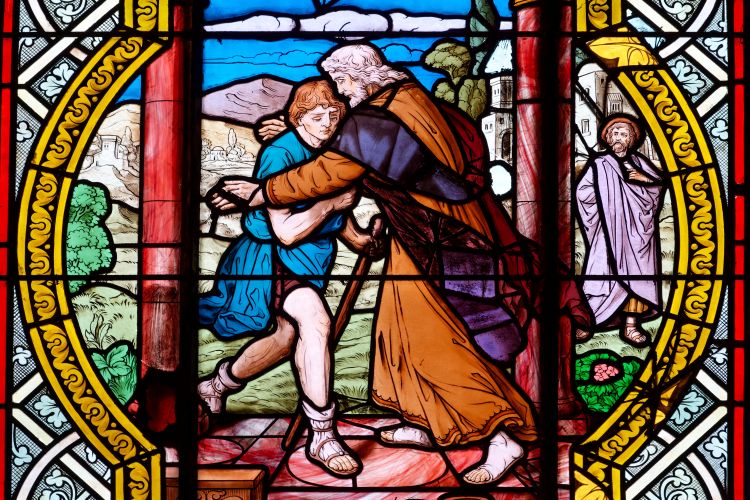
Joseph, son of Jacob the Patriarch, is the clearest and most compelling type of St. Joseph in the Old Testament. First, and most obviously, the Josephs of the Old and New Testaments share the same name. Second, both of their father’s share the same name, “Jacob the father of Joseph, the husband of Mary” (Mt 1:16). The fact that two Josephs are born to fathers named Jacob certainly makes a strong case for typology. God speaks to both through dreams, with both responding to those dreams accordingly (cf. Gn 37:5; Mt. 1:20). While for different reasons, both are forced to travel to Egypt – Joseph of the OT was forced into slavery and Joseph of the NT was fleeing Herod (cf. Gn 37:28; Mt 2:14). Finally, due to their righteous nature, they were both made rulers over their Lord’s most prized possessions. Pharaoh made Joseph the Patriarch the ruler of Egypt, while God made St. Joseph the head of the Holy Family (cf. Gn 41:40-41; Lk 2:51). By referring to Joseph the Patriarch, we can see that these details about St. Joseph are not insignificant. Rather, through the lens of typology, God highlights that St. Joseph is indeed a significant man in the plan of salvation.
Abraham
Both Abraham and Joseph were forced to take their wives to Egypt – Abraham due to a famine and Joseph to escape Herod (Cf. Gn 12:10; Mt 2:14). As for each of their sons, Abraham and Joseph both had to believe God regarding the miraculous nature of their conceptions (cf. Rom 4:18; Mt. 2:24). Finally, both men are fathers in a spiritual sense, with St. Paul assigning spiritual fatherhood to Abraham as the “father of many nations” in Romans 4:16, and St. Joseph serving as the foster father of Jesus and thus is a spiritual father to the Church and each of us as brothers and sisters in Christ.
Isaac
God appeared to Isaac at night and sent an angel to Joseph in a dream to assure both of them to not be afraid (cf. Gn 26:24; Mt1:20). Around the same time in Isaac’s story, he lives with his wife like she is his sister (something his father Abraham also did), which, although it was for a very different reason than that of Joseph’s chaste relationship with Mary, one can still draw parallels between the two (cf. Gn. 26:7; Mt 1:25). Also, like his father, Isaac had to retreat to a foreign land with his wife, just as Joseph fled to Egypt with Mary (cf. Gn 26:1; Mt 2:14). Finally, the wives of both Isaac and St. Joseph conceived children by the intervention of God (cf. Gn 25:21; Mt 1:20).
Jacob
Recall that Jacob is Joseph the Patriarch’s father, but he comes a little lower on the list of types because he has fewer parallels in common with St. Joseph. God spoke to both men in dreams (cf. Gn 28:12; Mt 1:20). Jacob and St. Joseph both took their families Egypt (cf. Gn 46:6; Mt 1:20). Pharaoh placed Jacob’s son, Joseph, as a sort of savior over Egypt, just as St. Joseph’s son, Jesus, was the savior of the world (cf. Gn 41:45; Jn 4:42). God’s intervention enabled the wives of both men to conceive and bear sons (cf. Gn 30:2, 22; Mt 1:20).
Elijah
Both Elijah and St. Joseph were forced to flee towards Egypt by rulers of Israel who threatened death (cf. 1Kgs 19:1-8; Mt 2:13). Most interestingly, while not his wife, Elijah lived chastely in a home with a woman, allowing her to care for him, whose son he would later raise from the dead (cf. 1Kgs 17). An angel told both men not to be afraid (2Kgs 1:15; Mt 1:20). Finally, both Elijah and St. Joseph were spiritual fathers, but, unlike Abraham, Elijah was not a biological father, strengthening his bond to St. Joseph in that regard (cf. 2Kgs 2:12; Lk 2:33).
In studying these types of St. Joseph together, we begin to see themes drawn out. For example, God speaks – and Joseph listens and acts – in the silence of dreams. Protecting Mary’s virginity through heroic chastity is a virtue which God had been building from the beginning. We also see the quiet strength in men who fled to foreign lands to protect their families in the face of uncertainty and danger. By recognizing Joseph the Patriarch, Abraham, Isaac, Jacob, and Elijah as types that find their fulfillment in the humble carpenter of Nazareth, we see that Joseph’s life was anything but insignificant. Every act of obedience, every silent “yes” to God’s will, every protective and chaste decision was part of a carefully planned story of salvation. God did not leave the upbringing of His Son to chance. He chose a man whose virtues, trials, and fidelity echoed the greatest patriarchs and prophets of the Old Testament.
These Old Testament figures illuminate what the sparse Gospel verses only hint at: St. Joseph was chosen precisely because of who he was. He is the just man (Mt 1:19) who perfectly displays the virtues God had been forming in His people for centuries. Through typology, the silent saint speaks volumes.
May the same God who guided Joseph through dreams and dangers continue to send us the right people at the right time, and may we, like St. Joseph, respond with the same trust, humility, and fidelity. In doing so, we participate in the ongoing story of salvation, becoming living instruments of God’s grace in our own time.
St. Joseph, pray for us!
Josephite Chaplets playlist (female voice).
Josephite Chaplets playlist (male voice).
To receive articles and reflections like these directly to your inbox, please subscribe.
If you like what you’re reading and wish to donate to help offset ongoing web maintenance, research, and development expenses for Catholic Heart Ablaze, please click here.


Leave A Comment