

Among the more common challenges that Catholics encounter from non-Catholic Christians is the objection to calling priests “Father.” The basis for the objection is usually a single verse from the Gospel of Matthew where Jesus says: “And call no man your father on earth, for you have one Father who is in heaven” (Mt 23:9). At first glance, this verse seems straightforward, so are Catholics disobeying Christ’s teaching? Let’s take a closer look at what Jesus meant by his words and the foundational reasons for why we call our priests “Father.”
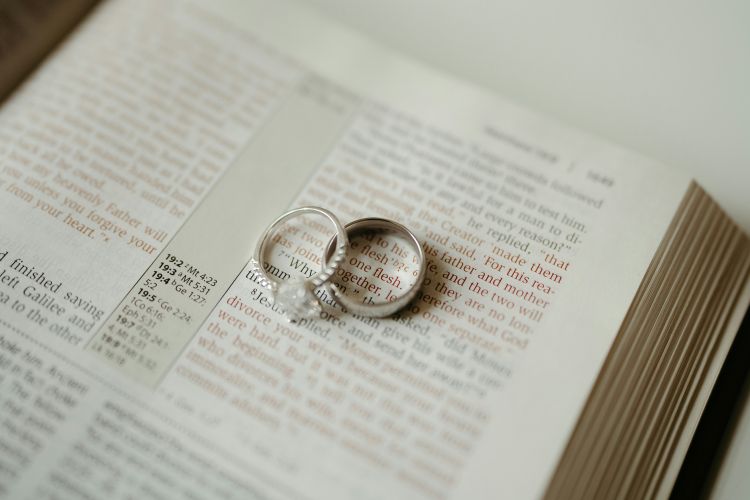
When interpreting scripture, the Catholic Church teaches that it is essential to read any passage in its proper context. A single verse cannot be isolated, or it has the potential to quickly become problematic when separated from the rest of the gospel. When you read Matthew, Chapter 23, beginning with verse 1, you see that Jesus is addressing the crowds regarding the scribes and Pharisees. These were religious leaders who sought honor and prestige rather than humility and service. He is warning against hypocrisy, pride, and the misuse of authority — not the mere use of titles. In verse 10, immediately following “call no man your father,” he says to call no one “Master,” which is also translated as “educator,” or “teacher.” If we were to take Jesus’ words literally, we would not only be prohibited from calling our priests “Father,” but also our biological parent, “father” or any educator, “teacher.”
What Jesus is doing here is speaking in hyperbole — an exaggerated expression meant to drive home a deeper truth — which is something he does in other places in scripture as well:
If your right eye causes you to sin, tear it out and throw it away. — Mt 5:29
Whoever does not hate his father and mother…cannot be my disciple. — Lk 14:26
Clearly, Jesus does not intend his followers to mutilate themselves or to despise their parents. He is simply using shocking language to emphasize the seriousness of sin and the primacy of loyalty to God. Similarly, in Matthew 23:9, Christ is not forbidding the ordinary or respectful use of the term “father.” He is condemning the prideful way the Pharisees sought to make themselves spiritual authorities, without recognizing that their authority comes from God.
As I stated earlier, isolating a single verse of scripture can quickly become problematic. We know that scripture cannot contradict itself, so let’s look at some of the numerous times men are referred to as “father” elsewhere in the New Testament.
Acts 7:2: And he replied, “My brothers and fathers, listen. The God of glory appeared to our father Abraham while he was in Mesopotamia, before he had settled in Haran.”
Romans 4:12: as well as the father of the circumcised who not only are circumcised, but also follow the path of faith that our father Abraham walked while still uncircumcised.
Romans 4:16-17: For this reason, it depends on faith, so that it may be a gift, and the promise may be guaranteed to all his descendants, not to those who only adhere to the law but to those who follow the faith of Abraham, who is the father of all of us, as it is written, “I have made you father of many nations.” He is our father in the sight of God, in whom he believed, who gives life to the dead and calls into being what does not exist.
Romans 9:10: And not only that, but also when Rebecca had conceived children by one husband, our father Isaac.
1 Corinthians 4:15: Even if you should have countless guides to Christ, yet you do not have many fathers, for I became your father in Christ Jesus through the gospel.
Philippians 2:22: But you know his worth, how as a child with a father he served along with me in the cause of the gospel.
James 2:21: Was not Abraham our father justified by works when he ordered his son Isaac upon the altar?
Now that we have established from scripture that the use of the term “father” is not contrary to Christ’s teaching, we will look more specifically at why we call our priests “Father.” From the earliest centuries, Christians have used familial terms for spiritual leaders. The term “Church Fathers” refers to spiritual elders such as, St. Jerome, St. Augustine, and St. Ignatius of Antioch. In his letter to Pope Boniface (Epistle 209), St. Augustine begins, “To my lord, most blessed and holy father, Boniface, Augustine sends greetings in the Lord.” This tradition is rooted in acknowledging the spiritual guidance and teaching priests provide.
A priest is also called “Father” because he participates in the fatherhood of God through his ministry. Just as a biological father gives life physically, priests give life spiritually through the sacraments. Through Baptism, priests bring new spiritual children into the family of God, through the Eucharist, priests feed their spiritual children with the Body and Blood of Christ, and through Confession, priests reconcile sinners to the Father’s mercy. However, their authority is not their own, but flows from Christ, the one High Priest. Calling a priest “Father” is not about exalting the man himself, but about acknowledging his role as a servant of God’s family.
Recall that when Jesus said, “call no man your father,” he was warning against hypocrisy and pride. That warning is still applicable today. Priests are human, too and, like all of us, are in danger of falling into sins of pride and power. They are called to emulate the humility and servant leadership of Christ, always remembering that their spiritual fatherhood is a gift and responsibility, not a personal achievement. True fatherhood is measured in the sacrificial love given. Ultimately, all fatherhood, whether biological or spiritual, participates in and points back to the one Fatherhood of God. St. Paul says, “For this reason I bow my knees before the Father, from whom every family in heaven and on earth is named” (Eph 3:14-15).
This week, recall all of the good fathers who have influenced you over the course of your life, whether biological or spiritual. What has made them good fathers, and how have they reflected the Fatherhood of God? How many of them are priests? Reflect on how your relationship and experiences with God the Father have deepened due to your experiences with the men you call “Father” on earth.
Chaplets for Priests (Male Voice)
Chaplets for Priests (Female Voice)
To receive articles and reflections like these directly to your inbox, please subscribe.

Leave A Comment