
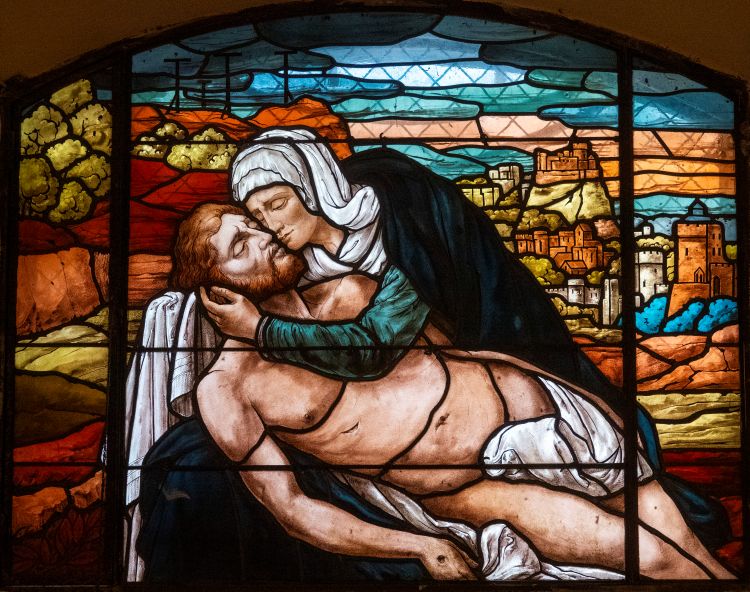
On All Souls’ Day the Church invites us to remember and pray for all the faithful departed. It is a day where we acknowledge that death is the one certainty that each of us must face, but it is also a day of hope because we trust in God’s mercy and his promise of eternal life. For Catholics, All Souls’ Day is not a gloomy day of remembrance but an invitation to live now in such a way that we may die well, reconciled with God and at peace. Considering death as the most important event for which a person ought to prepare, St. Robert Bellarmine, a 16th -century Jesuit and Doctor of the Church, wrote a spiritual treatise entitled The Art of Dying Well (De Arte Bene Moriendi) to aid souls in obtaining eternal happiness. While written over four hundred years ago, Bellarmine’s wisdom remains as relevant today as it was then, so let’s explore some key principles for dying well.
Before getting into how to die well, Bellarmine begins by reflecting on the dual reality of death. Death is an evil in itself because it is opposed to life. Everything that God created was good, and he did not create death; sin did. However, as we know, God can bring about good from anything. Through his mercy and Jesus’ resurrection, death has been transformed, and we can enter into new and eternal life with him. Another fruit of death, Bellarmine says, is “this great blessing, that death puts an end to the numerous miseries of this life,” and becomes a gate “from a prison to a Kingdom.” Therefore, Bellarmine does not consider death something to be feared, so long as one is adequately prepared.
The central principle of Bellarmine’s treatise, and the premise upon which all of his other precepts are founded, is that to die well, one must live well. Likewise, “he who hath never led a good life, cannot die a good death.” At first glance, it may seem as if Bellarmine is leaving out the possibility for people to have conversions, even a deathbed conversion. He is not. Conversion is always possible. What he means here, is that none of us know the day or the time of our death, so it is in our best interest to always be prepared by always living as if it is our last day. “We must acknowledge that it is a most dangerous thing to deter ‘til death our conversion from sin to virtue: far more happy are they who begin to carry the yoke of the Lord ‘from their youth,’ as Jeremiah saith.” In short, to live well is to live in such a way that our souls are always in a state of grace, reconciled to God and ready to meet him, which requires prayer, virtue, and repentance. The person who lives carelessly, ignoring sin and neglecting the spiritual life, should not be surprised when death comes as a thief in the night.
Another key theme in The Art of Dying Well is detachment from the world. Death strips us of all earthly possessions, honors, and relationships. None of these will follow us to the grave. Anything we achieve here will no longer matter, and the only thing that will remain is the state of our souls as we stand before God. Detachment is not a rejection of God’s creation, but a proper ordering of loves — using all things in this life as a path to the next without clinging to them or making idols of them. Use things with moderation, avoiding “the concupiscence of the flesh, the concupiscence of the eyes, and the pride of life.” We ought to seek to temper our desire for earthly things, comforts, and pleasures, and orient our souls toward God.
Bellarmine emphasizes living a life of virtue in order to die well, but there are six virtues he identifies specifically: the theological virtues of faith, hope, and charity, and the moral virtues of piety, justice, and sobriety. Faith is a virtue that begins in the heart with a belief in God and his promises, but if one does not live like one believes in God, it is a false faith. Hope comes from faith. When you believe in what God promises, you have hope in the good things to come, even in the midst of suffering. Charity, the “queen of virtues… springs from a ‘pure heart,’” and reflects our love of God and our love of neighbor for God’s sake. Moving to the moral virtues, piety is “a virtue, or Gift of the Holy Spirit, by which we regard God, and worship Him, and venerate Him as our Father.” However, to live the virtue of piety in this world is to go further — to reject and deny anything ungodly. Noting that God is a jealous God, Bellarmine cites several examples from swearing, to looking at women with lust, to talking during Mass. Justice is ordered to the good of our neighbor. Justice requires detachment from worldly goods and desires so we can give alms and follow the command not to covet. Sobriety is to be understood as the virtue contrary to drunkenness, but it goes beyond that. Sobriety includes “the virtue of temperance or moderation in general, which makes a man regulate what regards his body according to reason, not according to passion.” Intentionally practicing and cultivating these six virtues will lead to a life well lived and, therefore, a happy death.
Two other significant keys to the art of dying well are prayer and the sacraments. We ought to have a robust prayer life, praying frequently, and keeping our eyes always fixed on the Lord. Prayer enlightens us, strengthens us, renews our hope and confidence, increases our charity and humility, and allows us to find sweetness and delight in the Lord. We cannot live a life of virtue without the divine assistance that comes with prayer, and we cannot expect to receive any gifts from God for which we do not ask, including the perseverance necessary in life to obtain a happy death. The Seven Sacraments “are the Divine Instruments, as it were, which God uses by the ministry of His servants, to preserve, or increase, or restore His Grace to us; that so… we may one day arrive at eternal happiness with the holy Angels.” Bellarmine dedicates a chapter to each of the sacraments, but for now, I will highlight his words on the Eucharist. He calls the Holy Eucharist “the greatest of all the Sacraments,” not only because we receive grace plentifully, but also because we receive the Author of Grace himself. Bellarmine stresses the importance of receiving the Eucharist in the state of grace, with no stain of mortal sin on your soul. The Eucharist is medicine from the Divine Physician that will heal all of your spiritual sicknesses, preparing you for death.
Beyond these key principles, St. Robert Bellarmine addresses other aspects to the art of dying well that I do not have space to cover here. I would simply say it is worth the time to read his short book. On All Souls’ Day, as we pray for our departed brothers and sisters, we are also reminded of our own mortality. One day, we too will be remembered on this feast.
This week, reflect on St. Robert Bellarmine’s words, “He who lives well, dies well,” and resolve to follow his advice: live each day as if it were your last, frequent the sacraments, practice detachment, and cultivate your own prayer and virtue.
Chaplets for the Dead (Male Voice)
Chaplets for the Dead (Female Voice)
To receive articles and reflections like these directly to your inbox, please subscribe.

I truly enjoy the gift 🎁 of your spirit, your love 💗 of sharing your faith with others. Look forward to enjoying what you share with the readers. God Bless today and always.
Thank you so much…all glory to God!